

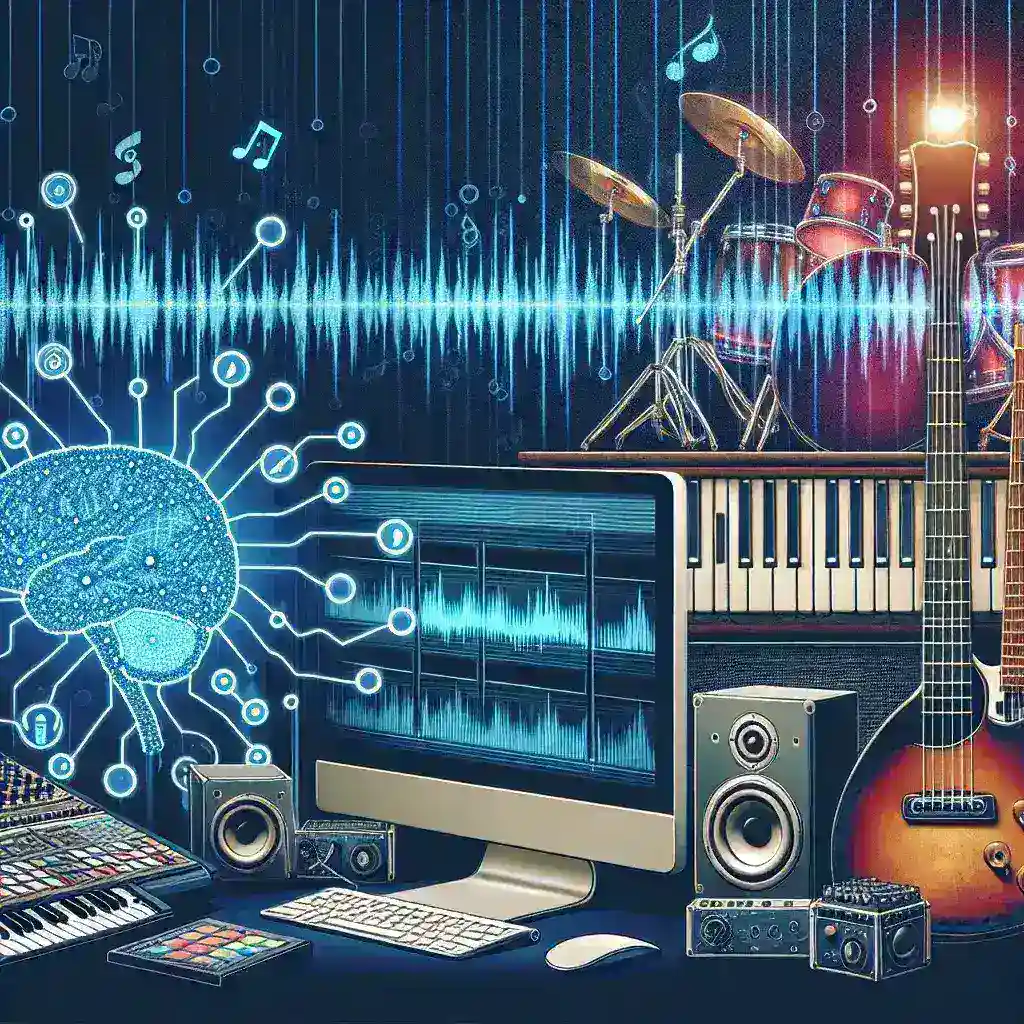
The Dawn of AI-Powered Musical Creativity
The intersection of artificial intelligence and music production represents one of the most fascinating developments in modern creative technology. As we stand at the precipice of a new era, AI for music and audio production is not merely a futuristic concept but a present reality reshaping how artists, producers, and engineers approach their craft. This technological revolution is democratizing music creation while simultaneously pushing the boundaries of what’s possible in audio production.
Understanding AI in the Musical Landscape
Artificial intelligence in music production encompasses a broad spectrum of applications, from simple automation tasks to complex compositional algorithms. At its core, AI systems analyze vast datasets of musical information to identify patterns, structures, and relationships that can be applied to create new content or enhance existing productions. These systems utilize machine learning algorithms, neural networks, and deep learning techniques to process audio signals, understand musical theory, and generate creative outputs.
Machine Learning and Musical Pattern Recognition
The foundation of AI music production lies in machine learning’s ability to recognize and replicate musical patterns. These systems can analyze thousands of songs across multiple genres, identifying common chord progressions, rhythmic patterns, and melodic structures. By understanding these fundamental elements, AI can assist in creating music that feels familiar yet innovative, striking a balance between creativity and commercial appeal.
Revolutionary AI Tools Transforming Music Production
The modern music production landscape is populated with an impressive array of AI-powered tools, each designed to address specific aspects of the creative process. These innovations are not replacing human creativity but rather augmenting it, providing artists with powerful new capabilities.
Intelligent Composition Assistants
AI composition tools have emerged as invaluable partners for songwriters and composers. Platforms like AIVA (Artificial Intelligence Virtual Artist) and Amper Music can generate complete musical compositions based on user-defined parameters such as mood, genre, and instrumentation. These tools analyze millions of classical and contemporary pieces to create original compositions that serve as starting points for human artists or complete standalone works.
Advanced Audio Processing and Enhancement
Audio enhancement has been revolutionized through AI-powered processing tools. LANDR’s automated mastering service uses machine learning algorithms to analyze tracks and apply professional-grade mastering techniques, making high-quality audio production accessible to independent artists. Similarly, iZotope’s AI-powered plugins can automatically detect and correct audio issues, remove unwanted noise, and optimize vocal recordings with unprecedented precision.
Virtual Instruments and Sound Design
AI has enabled the creation of incredibly realistic virtual instruments that can replicate the nuances of acoustic instruments or generate entirely new sounds. Google’s NSynth uses neural networks to create hybrid instruments by blending characteristics from different sound sources, opening up new possibilities for sound design and musical expression.
The Creative Process: Human-AI Collaboration
Rather than replacing human creativity, AI serves as a collaborative partner in the music production process. This symbiotic relationship allows artists to explore new creative territories while maintaining their unique artistic vision. Musicians can use AI to overcome creative blocks, experiment with different arrangements, or generate ideas that they might not have considered otherwise.
Workflow Enhancement and Efficiency
AI significantly streamlines the production workflow by automating time-consuming tasks such as audio editing, level balancing, and basic mixing operations. This automation frees up creative professionals to focus on the artistic aspects of production, leading to more efficient and fulfilling creative processes. Producers can now spend more time on arrangement, creative mixing decisions, and artistic direction rather than technical minutiae.
Democratizing Music Production
One of the most significant impacts of AI in music production is its democratizing effect on the industry. Previously, high-quality music production required expensive equipment, extensive technical knowledge, and years of experience. AI-powered tools are breaking down these barriers, enabling bedroom producers and independent artists to create professional-sounding recordings with minimal resources.
Accessibility and Learning Opportunities
AI tools often include educational components that help users understand music theory, production techniques, and industry standards. These systems can provide real-time feedback and suggestions, serving as virtual mentors for aspiring producers. This educational aspect accelerates the learning curve and helps democratize knowledge that was once exclusive to formal music education or expensive private instruction.
Industry Adoption and Professional Applications
Major record labels, production houses, and streaming platforms are increasingly integrating AI technologies into their operations. Spotify’s recommendation algorithms use AI to analyze listener preferences and musical characteristics, while major labels employ AI for A&R scouting, identifying potential hit songs and emerging artists based on data analysis.
Commercial Music Production
In commercial settings, AI is being used to create background music for advertisements, films, and video games. The ability to generate custom music quickly and cost-effectively has made AI an attractive option for media companies with tight deadlines and budgets. This application has created new revenue streams while challenging traditional approaches to commercial music creation.
Challenges and Ethical Considerations
Despite its revolutionary potential, AI in music production faces several challenges and ethical considerations. Questions of authorship, copyright, and artistic authenticity continue to spark debate within the creative community. When an AI system generates a melody or chord progression, who owns the rights to that creation? These legal and ethical questions require careful consideration as the technology continues to evolve.
Preserving Human Artistry
Critics argue that over-reliance on AI could lead to homogenization of musical content, potentially stifling human creativity and cultural diversity in music. The challenge lies in leveraging AI’s capabilities while preserving the human elements that make music emotionally resonant and culturally significant. The key is finding the right balance between technological assistance and human artistic expression.
The Future Landscape of AI-Powered Music Production
Looking ahead, the future of AI in music and audio production promises even more sophisticated and intuitive tools. Emerging technologies such as quantum computing and advanced neural networks may enable AI systems to understand and replicate human emotion in music with unprecedented accuracy. We can expect to see more personalized AI assistants that learn individual artists’ styles and preferences, becoming true creative partners rather than mere tools.
Emerging Technologies and Innovations
Virtual and augmented reality integration with AI music production tools will create immersive creative environments where artists can compose and produce music in three-dimensional spaces. Real-time collaboration between human musicians and AI systems will become more seamless, enabling live performances that blend human and artificial creativity in real-time.
Industry Evolution and Adaptation
The music industry will continue to adapt to these technological changes, developing new business models, legal frameworks, and creative practices. Educational institutions are already incorporating AI music production into their curricula, preparing the next generation of musicians and producers for an AI-enhanced creative landscape.
Practical Implementation for Modern Producers
For producers looking to integrate AI into their workflow, the key is to start small and gradually expand usage as comfort and understanding grow. Begin with simple AI-powered plugins for tasks like EQ suggestion or vocal tuning, then progress to more complex applications like composition assistance or automated mixing. The goal should be to enhance rather than replace human creativity, using AI as a tool to explore new possibilities and streamline production processes.
Building an AI-Enhanced Studio
Modern studios are increasingly incorporating AI tools alongside traditional equipment. This hybrid approach combines the warmth and character of analog gear with the precision and efficiency of AI-powered digital tools. The result is a production environment that offers both creative inspiration and technical excellence, enabling producers to achieve professional results while maintaining artistic integrity.
Conclusion: Embracing the AI Revolution
The integration of AI into music and audio production represents a paradigm shift that offers unprecedented opportunities for creativity, efficiency, and accessibility. While challenges and ethical considerations remain, the potential benefits far outweigh the concerns. As we move forward, the most successful artists and producers will be those who embrace AI as a creative partner while maintaining their unique human perspective and artistic vision. The future of music production lies not in choosing between human creativity and artificial intelligence, but in finding innovative ways to combine both for extraordinary artistic results. By understanding and thoughtfully implementing these technologies, the music industry can continue to evolve while preserving the emotional depth and cultural significance that make music such a powerful force in human experience.
Leave a Reply